February 4th, 2026
By Angelina Brandt, UCRRA Director of Sustainability, adapted from the New York Product Stewardship Council
New York is no stranger to innovation, especially when it comes to tackling environmental challenges. From pioneering climate policy to advancing waste management initiatives, the Empire State has long been at the forefront of creating lasting solutions.
But despite these efforts, New York is facing a growing dilemma in its recycling system – one that’s growing more complex and costly by the year. Recycling programs designed to reduce waste, cut down on greenhouse gas emissions, and conserve valuable landfill space, are struggling to stay afloat under increasing financial strain. The reality that the cost to collect, sort, process, and market recyclable materials far outweighs their value is deeply problematic for the sustainability of recycling programs. In fact, municipal programs across NYS are spending millions annually on recycling, yet across the state, an estimated 860,000 tons of recyclable materials are still being lost to landfills each year.
It doesn’t have to be this way. There’s a solution in sight, one that could overhaul how NYers recycle, reduce the financial strain on local governments, and transform New York into a leader in sustainable packaging. It all begins with a bold legislative shift that will hold businesses accountable for the waste they create – Extended Producer Responsibility, or EPR.
The Problem: Packaging Waste Is Out of Control
Local governments are expected to manage every aspect of recycling: paying for collection, navigating fluctuating market prices, and adapting to an ever-evolving landscape of materials. In Ulster County, we see the difficulties of high processing costs and high contamination rates to be some of our greatest challenges. Meanwhile, major corporations that manufacture packaging face no real responsibility for the waste their products generate. They remain disconnected from the end-of-life management of their packaging, much of which is neither reusable nor widely recyclable. This packaging ends up in landfills, at energy recovery plants, or, worse, littering the environment.
It’s a system that has a lot of room for innovation and improvement – especially when the packaging itself is often designed without recycling in mind. On top of that, NYS has a patchwork of services, where materials accepted in one town may be rejected in the next, only fueling consumer confusion and contributing to wasted resources. The result is a growing crisis of packaging waste that current systems cannot manage. If we are to address the state’s solid waste crisis, we must change this paradigm. Local governments and taxpayers can no longer shoulder the increasing complexity and cost of managing packaging waste, especially when the companies profiting from it are left off the hook.
The Solution? EPR.
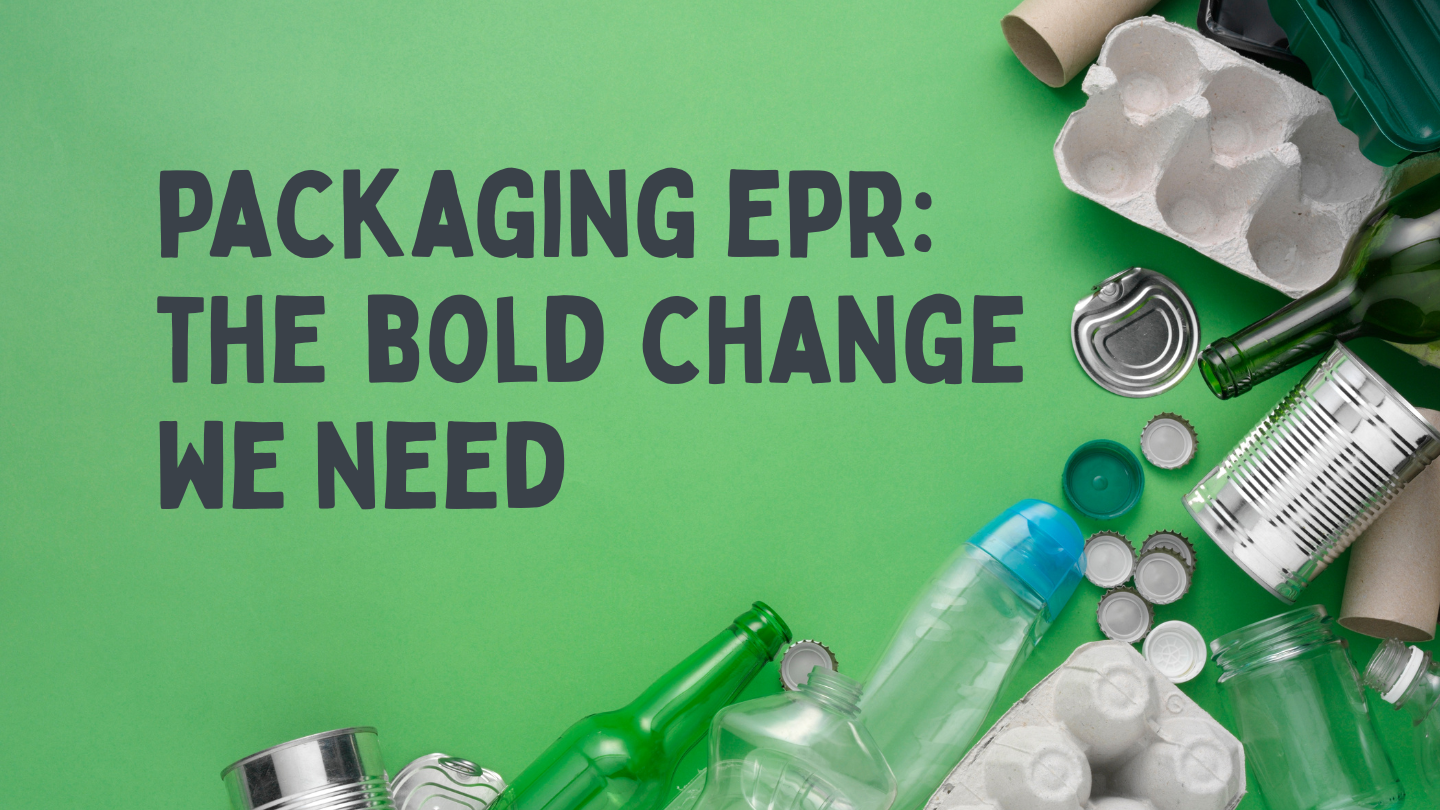
Extended Producer Responsibility (EPR) is a policy approach that shifts the responsibility of managing waste from local governments to the companies that produce the products and their packaging. Right now, the New York State Senate and Assembly are negotiating the details of the Packaging Reduction and Recycling Infrastructure Act (S1464 / A1749), a proposed law that could transform how New York addresses its recycling crisis by placing the financial burden on producers, not taxpayers.
If enacted, this law would require producers to take responsibility for the entire lifecycle of their products. This includes ensuring packaging is recyclable, designing products with disposal in mind, and funding the collection and recycling of materials they create.
With each passing year, the financial strain on local governments and taxpayers grows, and the state’s recycling system becomes more unsustainable. The Packaging Reduction and Recycling Infrastructure Act represents an opportunity to shift the burden to those who are responsible for the waste being created. With continued public support, there’s a real chance that 2026 could be the year that New York finally enacts comprehensive, long-term solutions to its recycling crisis.
Enacting the Packaging Reduction and Recycling Infrastructure Act presents a unique opportunity for New York to significantly enhance its recycling efforts and environmental impact. By implementing this legislation, the state could save local governments an estimated $250 to $300 million annually! At the same time, it would expand recycling access across the state, reduce greenhouse gas emissions, and increase recycling rates threefold. Recycling not only conserves valuable resources but also uses far less energy than producing goods from virgin materials, leading to a reduction in the state’s carbon footprint. By improving recycling rates through EPR, New York can make a meaningful contribution to combating climate change while building a more sustainable economy.
For municipalities like Ulster County, this legislation would provide the funding needed to modernize recycling infrastructure, enabling our community to process a wider variety of materials and handle new, innovative packaging designs that are currently difficult or impossible to recycle. Beyond shifting financial responsibility, the Packaging Reduction and Recycling Infrastructure Act would encourage companies to create better, more efficient packaging design, leading to less waste and more sustainable materials. When producers are held accountable for the lifecycle of their packaging, they have a direct incentive to reduce unnecessary plastic, invest in refillable systems, and explore compostable or easily recyclable alternatives. Countries with EPR programs, such as Canada and several EU nations, have seen improvements in recycling rates packaging efficiency, with brands phasing out hard-to-recycle plastics in favor of smarter, circular solutions. New York has the opportunity to follow this path, fostering innovation while tackling its mounting waste crisis.
EPR isn’t just about holding producers accountable—it’s about creating a circular economy. A circular economy keeps materials in use as long as possible, reducing raw resource consumption and minimizing waste. Already, five states—Maine, Oregon, Colorado, California, and Minnesota—and over 40 counties in Europe and Canada have enacted packaging EPR laws, with recycling rates as high as 80%. In contrast, New York’s current recycling rate is just 18%. In Ulster County, the recycling rate is currently around 20%, and with the enactment of this Act, we could significantly increase recycling rates all across the state. We have a chance to change that now!
Be Part of the Solution: Advocate for EPR
While New York has made significant strides toward implementing EPR, the journey hasn’t been without its challenges. The Packaging Reduction and Recycling Infrastructure Act still faces opposition from some industry groups, who argue that it places too much financial strain on producers. However, this overlooks the larger cost of inaction.
By continuing to place the burden of recycling on local governments and taxpayers, we are only shifting financial strain to those who are least equipped to handle it. And while initial financial investment for producers may seem steep, businesses will likely see long-term savings due to reduced disposal fees and improved resource efficiency. Local governments across the Hudson Valley will also save millions, which can be reinvested in other critical community needs.
The next phase of the Packaging Reduction and Recycling Infrastructure Act will involve a vote in the Senate and Assembly. Now is the time to speak up in support of the Packaging Reduction and Recycling Infrastructure Act. New Yorkers can help by reaching out to legislators, spreading awareness, and reducing single-use packaging. Supporting this bill means stronger recycling programs and a cleaner environment for our community.
Visit www.nypsc.org to learn more about the Packaging Reduction and Recycling Infrastructure Act (S1464 / A1749) and learn how you can contact your local representatives to encourage them to support its enactment.