
Six Ways to Manage Autumn Leaves
Blog by UCRRA Master Composter – Recycler Volunteer Joel Z. (Class of 2025)
November 16th 2026
One morning last week I went to collect overflowing leaf bags that were lining up on the neighborhood curb, waiting to be picked up and hauled away. A neighbor woman came out of her house and caught me red-handed running off with her leaves. She looked at me with curiosity and a bit of skepticism as she posed the question “What do you use them for?” I told her I use them to enrich the soil. She looked a little blank, got into her car and headed off into her day.
As many people know, and many people don’t know, much of the nutrition and organic matter that we might pay for via bagged soil products sold at home improvement stores is readily contained within what our trees give to us naturally and completely free of charge. Cut or mow your leaves into pieces, mix with nitrogens/green matter, and they will create fresh compost, or spread the chopped-up leaves in winter as a mulch that can protect soil and plants. Autumn leaves convert the soil into “black gold”
Trees are naturally sustainable, absorbing nutrients from the soil and a portion of those nutrients are stored in the leaves. In Autumn, as trees let their leaves fall, we can gather and use them for free. The leaves can be mowed or chopped and recycled either as a prime compost ingredient or spread along the ground as garden mulch, in the same way that a tree provides its own mulch by releasing its leaves and letting them drop down, blow around and gather.
The following methods could be utilized to advantage and save money we might otherwise spend on garden soil, fertilizers, etc.
Shredding:
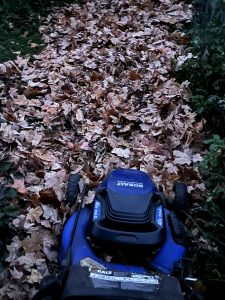
Gather dry autumn leaves and shred by running over them with a lawnmower or putting them though a leaf grinder/mulch maker. Shredding the leaves is a crucial step as it opens up the leaf, allows water and fluids to be absorbed and makes it easier for microbes and other feeders (like worms) to access the carbon in the leaf.
Leaves contain a waxy outer layer called “the cuticle,” which is like a built-in raincoat that must be cut and torn, severing the veins and crumpling the flat shape of the leaf. The leaves then act as a soil sponge, and air pockets are created where oxygen can circulate. Surface areas multiply to allow microbes and bacteria to feed without resistance.
Leaves As Nutrient-filled Fall/Winter Garden Mulch:
Spread a layer of shredded leaves around the base of trees, shrubs, perennials and garden beds to retain soil moisture, suppress cool season weeds, and insulate the roots from winter cold. Other benefits include prevention of winter frost heaving and topsoil erosion from winter rain and snow. Mulch also helps keep the soil at a more consistent temperature level. Avoid using whole leaves on garden soil because whole leaves can mat into an impermeable soggy sheet that can suffocate soil bacteria and create an anaerobic soil barrier on top. By the time Winter ends and Spring is back, worms and soil microbes from deep in the existing soil will have feasted, digested, and distributed the resulting organic matter from their own bodies down into the soil of the garden. The soil is then renewed, fertile, ready for the planting and growing that follow.
Browns and Greens Together: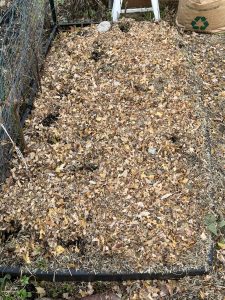
Chopped leaves serve as a carbon-rich “brown” which is scarce during the growing season and can be added to the compost pile throughout the year and growing season. Mix them into a compost pile to act as a rich carbon source that balances wet nitrogen-heavy kitchen scraps. Rake up leaves from trees on your own property or gather the big paper bags that neighbors have filled and left for yard waste by the side of the road. Store bags in a dry place or cover with a tarp until you are ready to work with them. And don’t forget to shred!
Leaf Mold:
Leaf mold is another use for leaves and is one of the highest moisture retention substances on Earth, holding up to five times its weight in water. Added to your soil, leaf mold improves aeration better than peat moss. Suggestion: Make a circular wire bin using poles, garden stakes and chicken wire or make a compost bin from a trash can with plenty of holes for aeration. Pack shredded leaves into this, moisten thoroughly and then let the cool-season fungi do the work over the next six months. This process is known as “fungal decomposition.” You can even add finished compost or some shredded leaf mulch, then use the leaf mold as a seed-starting mix.
Quicker Compost Creation: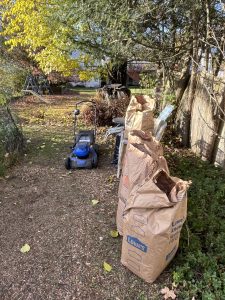
Another process for autumn leaves has been practiced by Amish farmers for many, many years, though I myself have only very recently heard about it. Amish farmers know how to make compost in a much shorter time by directly adding readily available nitrogen to the Autumn leaves. This nitrogen could be gotten by wetting the shredded leaves with fresh manure tea, blood meal tea, or packaged dry chicken manure tea. Doses of nitrogen ‘fuel’ the carbon-rich leaves. When you pour the nitrogen over the leaves, make sure to do it directly over the ground. Soil must be right beneath the leaf pile and not a tarp, stone floor or even cardboard. This allows the worms and microbes underground to come up and assist in the composting process. Begin to stack layers of leaves, adding nitrogen to each layer in the form of liquid manure or blood meal tea. This immediate exposure to water soluble, readily available nitrogen turns leaves into compost in a matter of weeks.
Keeping Autumn leaves where they fall: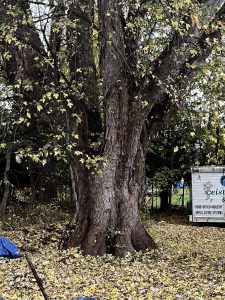
Finally, keeping the leaves where they accumulate on your property can provide a warm natural habitat for beneficial insects like ladybugs, queen bumblebees, moth and butterflies; even frogs, toads, salamanders and other creatures to survive the cold of Winter.
I’m excited to be experimenting more with leaves this year, and look forward to a good growing season for everyone!